


























New MOLYKOTE® Oil & Gas brochure: choosing the right lubrication for critical equipment
Offshore platform, drilling equipment, refinery or storage terminal: oil and gas industry installations bring together very different components, often exposed to severe operating conditions.
High loads, extreme temperatures, humidity, corrosion, dust, chemicals, shocks or vibrations can affect valves, bearings, threads, seals and sliding surfaces. In this context, simply searching for a “high-performance grease” or a “lubricant for refineries” is not enough.
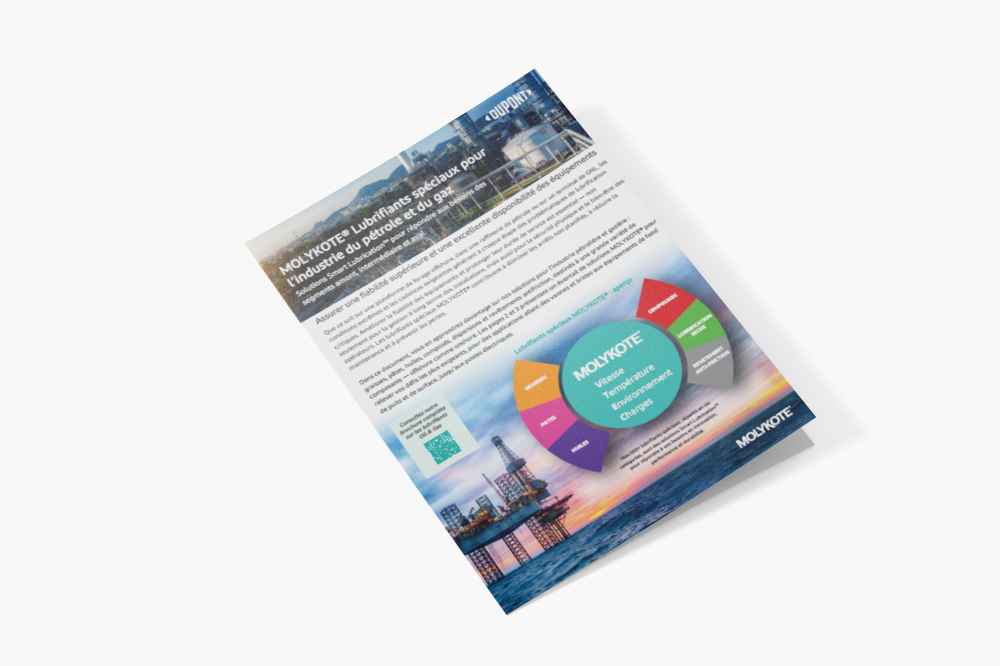
To help industrial teams better structure their selection, MOLYKOTE®, a DuPont brand, has published a new brochure dedicated to Oil & Gas applications. This resource presents the main specialty lubrication technologies to consider for surface equipment, downhole components, valves, flanges, threaded connections, bearings, gears, seals and certain electrical installations.
As a MOLYKOTE® partner, Samaro makes this documentation available to its customers and supports them in using it. The brochure helps identify possible options. Samaro’s expertise then helps compare them with the materials, movements, environment and real requirements of the specifications.
In this article, we have selected several representative applications to explain the selection logic, without turning the article into a catalogue of references.
Why download the new MOLYKOTE® Oil & Gas brochure?
This brochure can help your teams to:
A new MOLYKOTE® brochure built around Oil & Gas applications
The new MOLYKOTE® documentation does not start only from product families. It helps the reader reason from the equipment and mechanical functions encountered in the oil and gas industry.
This approach is particularly useful because two components within the same installation may require very different technologies.
A winch bearing must maintain lubrication adapted to its movement and load. A threaded connection must be tightened in a controlled way, withstand its environment and remain removable. A valve stem exposed to dust may require a dry film rather than a grease that could retain particles.
The documentation therefore becomes an orientation tool for maintenance teams, methods teams, engineering offices, equipment manufacturers and operators. It provides an overview of the applications, constraints and MOLYKOTE® solutions to explore further.
However, it does not replace technical data sheets, the analysis of the specifications, or any tests that may be required before qualification.
Which criteria should be checked before selecting an Oil & Gas lubricant?
The market provides context, but it is not enough on its own to choose a product. The selection must start with the component and the expected function.
Which component needs to be lubricated or protected?
The first step is to identify the exact area concerned:
- Bearing
- Thread
- Valve stem
- Seal
- Gear
- Hinge
- Sliding surface
- Electrical contact
This distinction avoids reasoning with overly broad expressions such as “valve grease” or “lubricant for offshore platforms”.
What function must the product provide?
The solution may be required to:
- Reduce friction.
- Limit wear.
- Prevent seizing.
- Facilitate assembly.
- Help control tightening.
- Protect certain surfaces against corrosion.
- Facilitate future disassembly.
- Limit dust adhesion.
- Support seal operation.
The answer may therefore take the form of a grease, a paste, a compound, an oil or an anti-friction coating.
Under what conditions does the equipment operate?
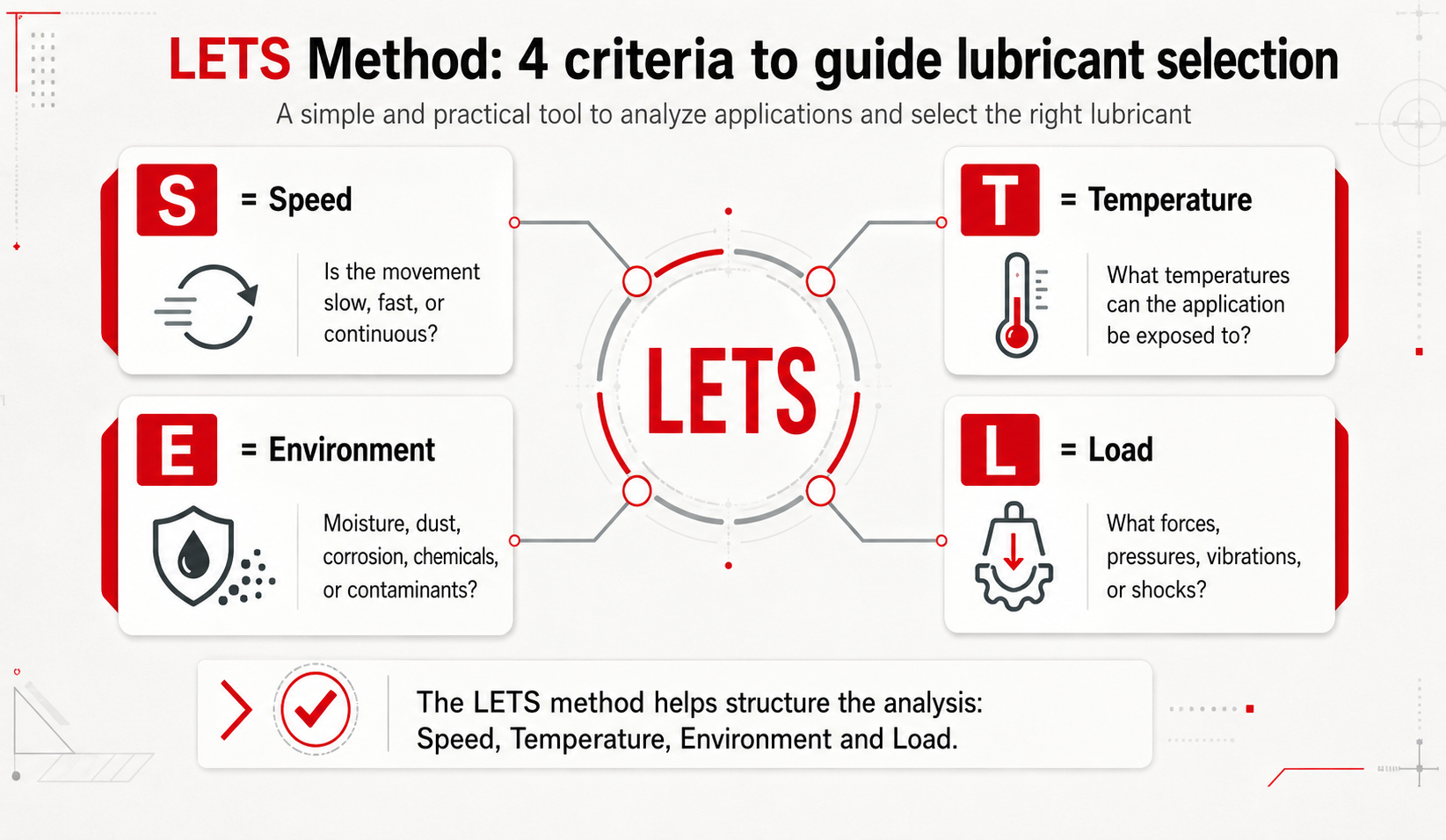
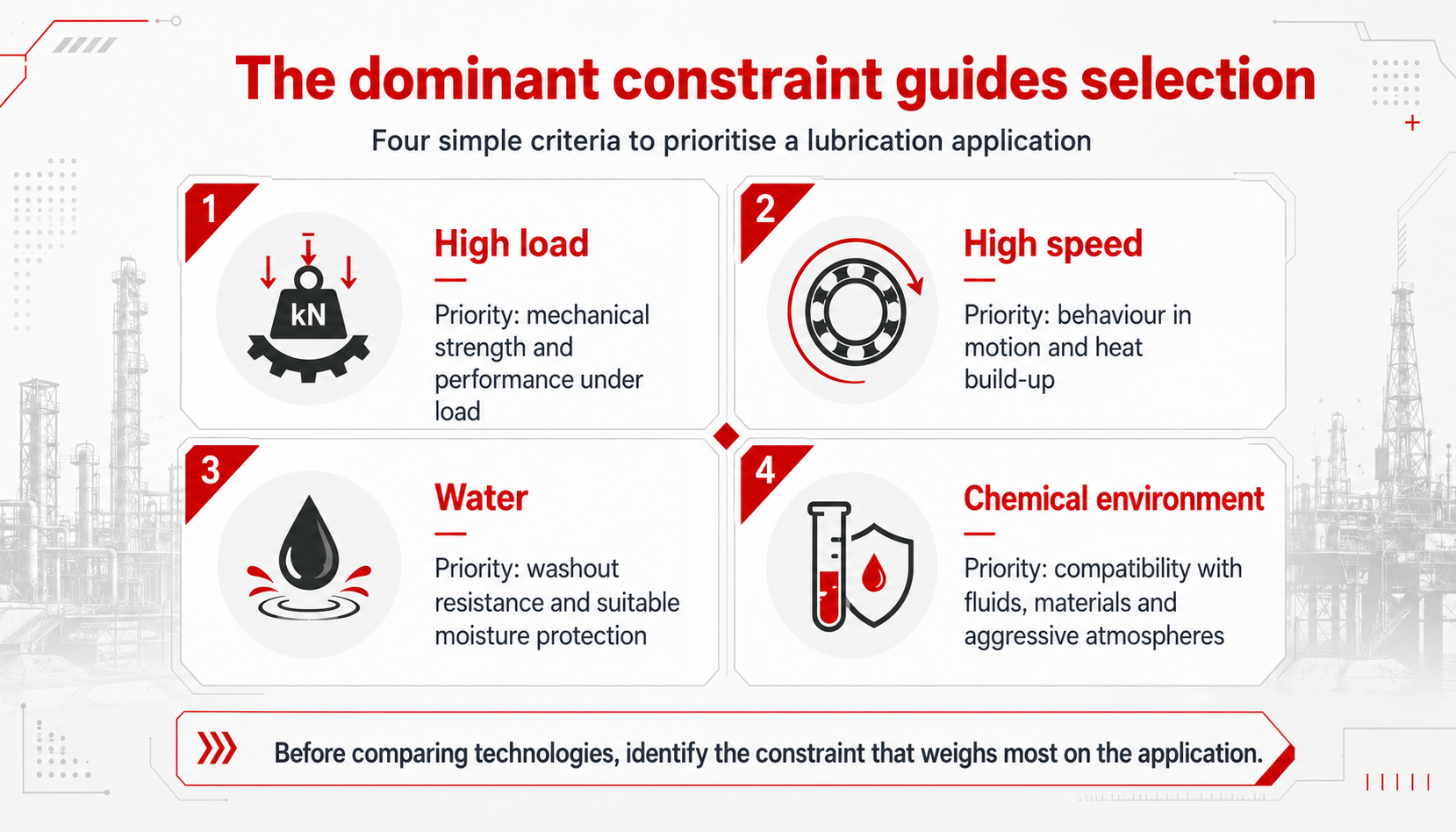
Load, environment, temperature and speed provide an initial analysis framework. This approach, often summarized in English as the LETS method, helps organize the information before comparing solutions.
It should be completed with:
- The materials in contact.
- The presence of water, solvents or chemicals.
- Shocks and vibrations.
- Operating cycles.
- Relubrication possibilities.
- Access constraints.
- Assembly and disassembly requirements.
- Applicable standards, approvals or specifications.
Oil & Gas applications to explore in the MOLYKOTE® brochure
The brochure is not intended to replace technical analysis. Its main purpose is to help visualize the major application families and identify the MOLYKOTE® technologies to explore further according to the equipment, its environment and its maintenance constraints.
The objective is therefore not to select a reference directly, but to better prepare the technical discussion: which component is concerned, which function is expected, which constraints are dominant and which technologies should be evaluated?
Surface equipment, downhole equipment and difficult-to-access areas
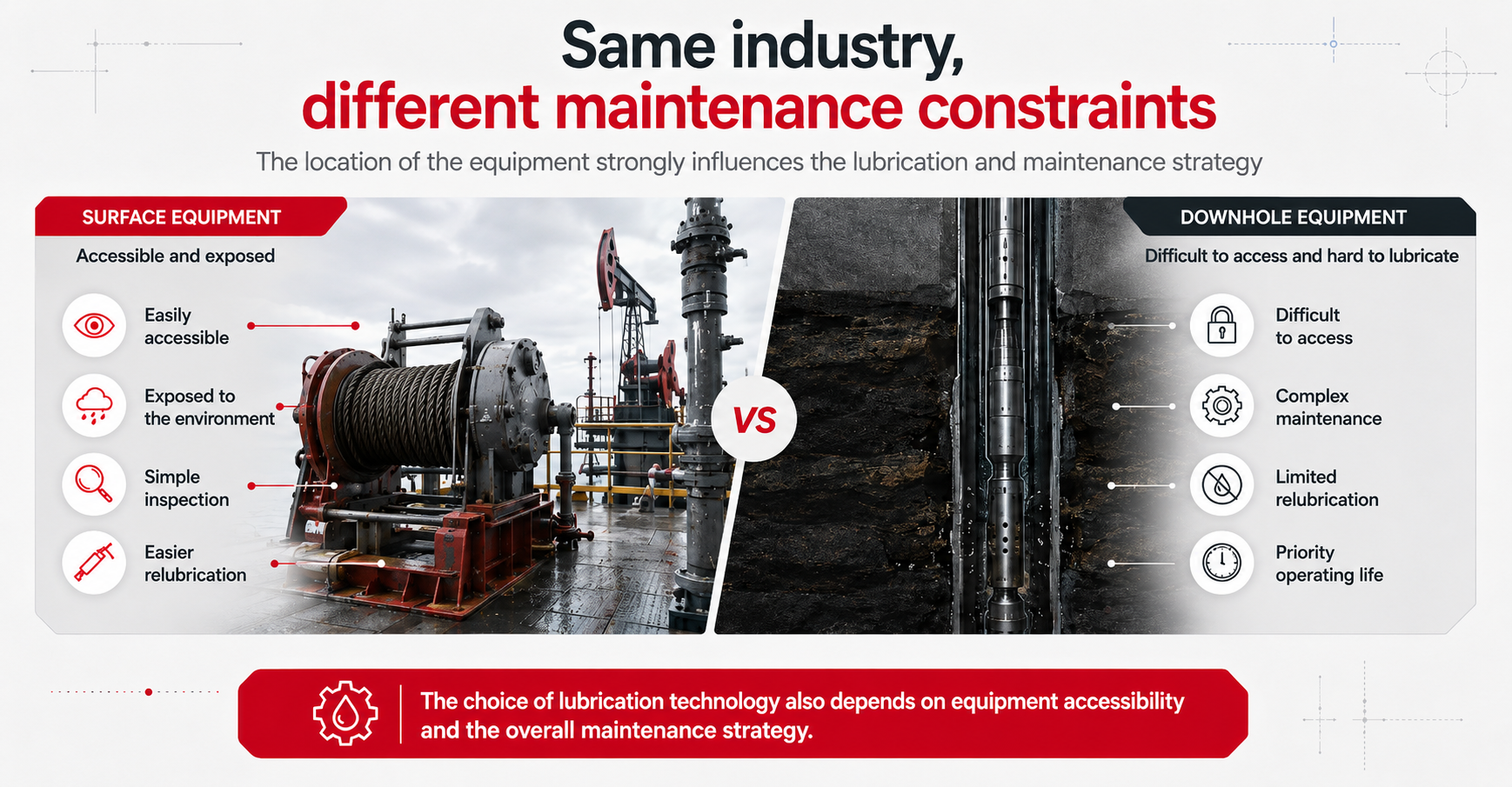
Winches, pulleys, wire ropes, pipe-handling systems or downhole equipment can be exposed to high loads, water, corrosion or limited maintenance access.
The brochure helps distinguish situations where a grease, a paste or an anti-friction coating may be studied. For bolting applications, MOLYKOTE® P-3300 may be an interesting option to examine in order to facilitate tightening and disassembly, while helping to prevent seizing, subject to validation according to the materials, temperature, environment and torque requirements.
Industrial valves: one valve, several areas to treat
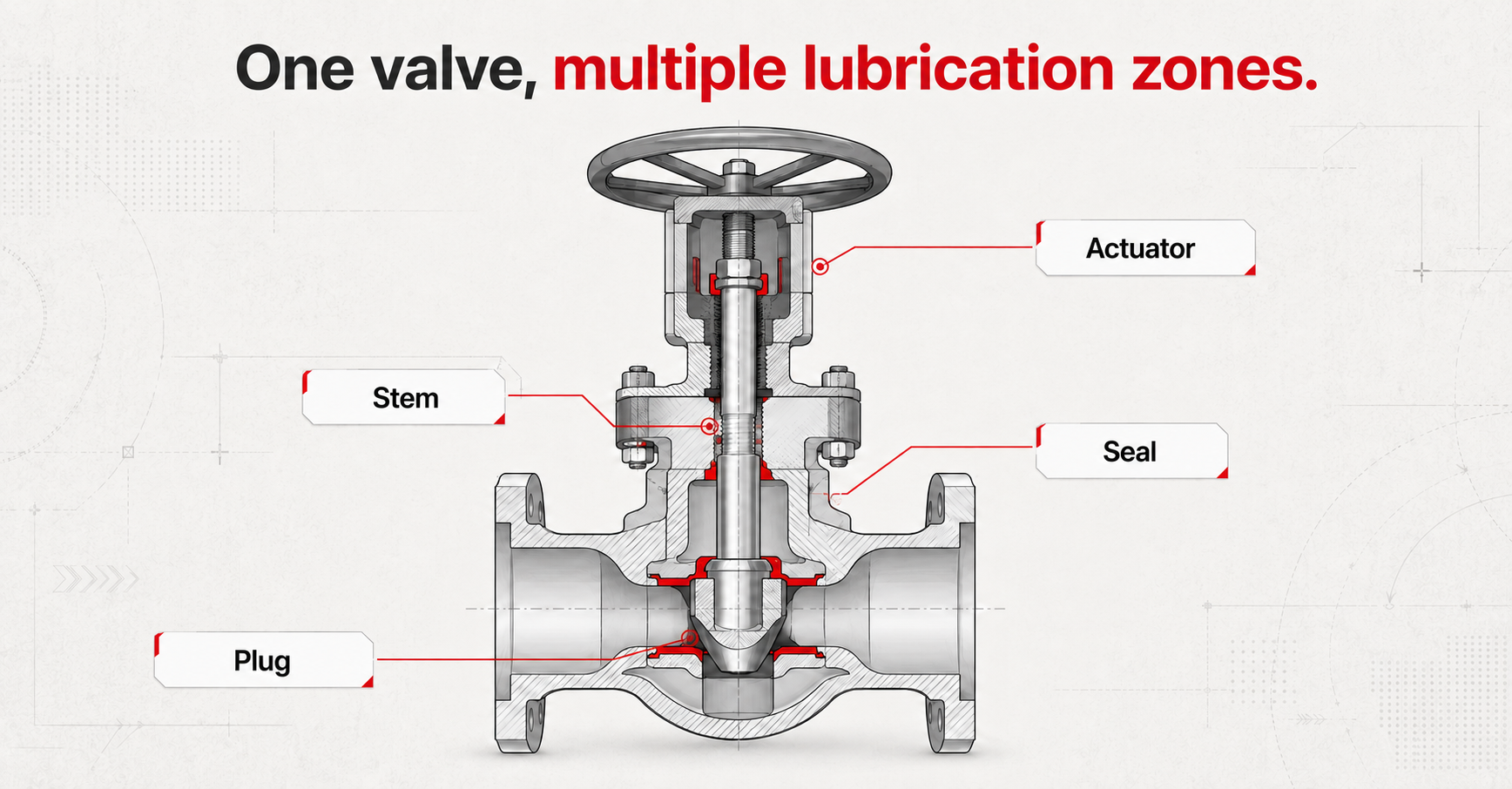
A valve includes several areas: stem, seals, closure element, seat rings, actuator or bolting. They do not all involve the same movements, materials or exposures.
The brochure helps identify several possible approaches: dry anti-friction coating for certain sliding surfaces exposed to dust, grease or a specific formulation when chemical resistance becomes the priority, or a solution adapted to seals after checking material compatibility.
For certain sliding surfaces or valve stems exposed to dust, MOLYKOTE® D-321 R can be highlighted as a dry anti-friction coating to evaluate. When the dominant constraint is the chemical resistance of a valve lubricant, MOLYKOTE® 3452 can also be studied according to the fluid, temperature, pressure and real environment.
Flanges and threaded connections: controlling friction during tightening
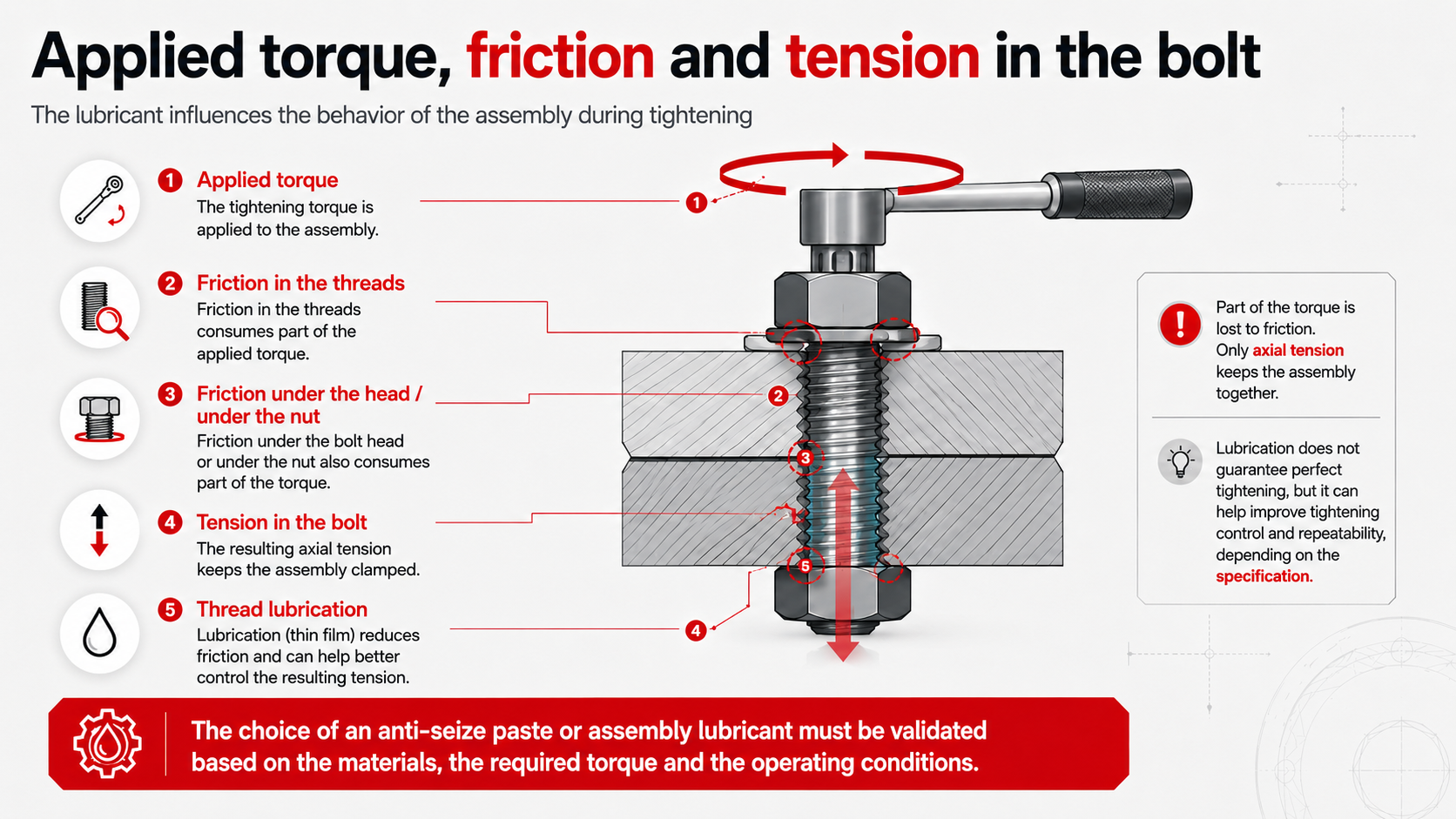
On a bolted assembly, lubrication can help limit seizing, control friction in the threads and under the head, facilitate tightening and support future disassembly.
For bolting applications, MOLYKOTE® P-3300 can be studied to facilitate tightening and disassembly, while helping to prevent seizing. Developed by MOLYKOTE®, MOLYKOTE® P-40 (S) Paste, PFAS-free, may also be a reference to examine for certain assemblies exposed to corrosion, depending on the materials, temperature, torque requirements and maintenance conditions.
Bearings, seals and sensitive interfaces: identifying the dominant constraint
Bearings, seals and sensitive interfaces may require very different approaches. The brochure helps review the constraints to prioritize: load, speed, temperature, water, chemicals, vibrations or relubrication frequency.
References such as MOLYKOTE® BR-2 Plus, MOLYKOTE® HP-300 Grease or MOLYKOTE® 111 may be studied depending on the application, without being generalized to all bearings or all seals.
The choice must always be confirmed with the materials, the fluid in contact, the temperature, the movement and the maintenance requirements.
Grease, paste, compound or anti-friction coating?
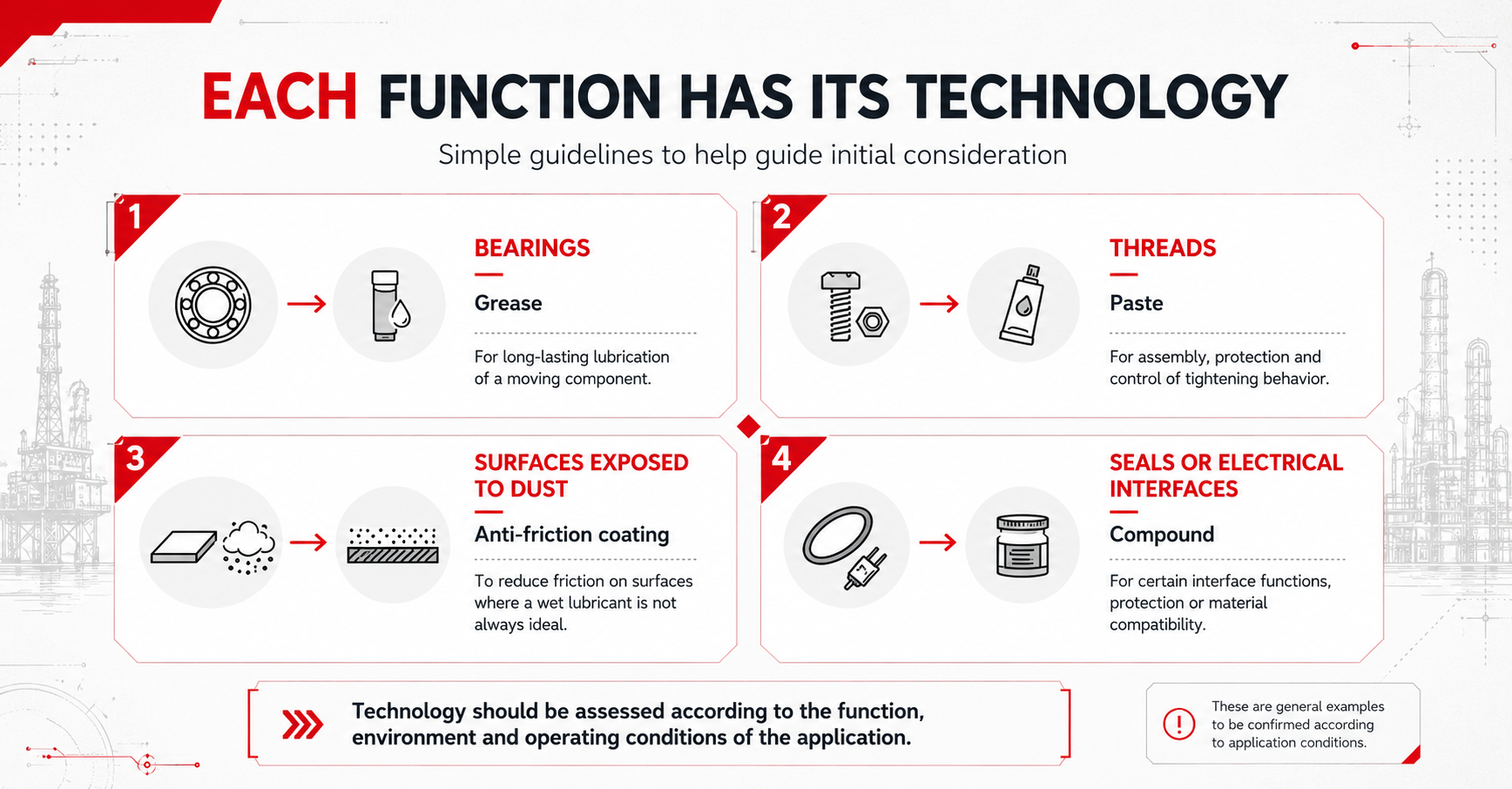
The new brochure highlights the diversity of MOLYKOTE® technologies available for Oil & Gas applications.
Grease
A grease is generally used to maintain lubrication over time on bearings, gears or actuators.
Its behaviour depends in particular on the base oil, thickener, viscosity and additives.
Paste
A paste is particularly suitable for certain assemblies, threads and slow movements subjected to high pressures.
It can help limit seizing, control friction and facilitate disassembly.
Anti-friction coating
After application and curing, the coating forms a dry film fixed to the surface.
It may be relevant when dust attraction must be limited, when relubrication is difficult or when a clean surface is required.
Compound
Depending on its formulation, a compound can be used for seal lubrication, protection against moisture or electrical insulation.
It should not be automatically treated as a conventional mechanical grease.
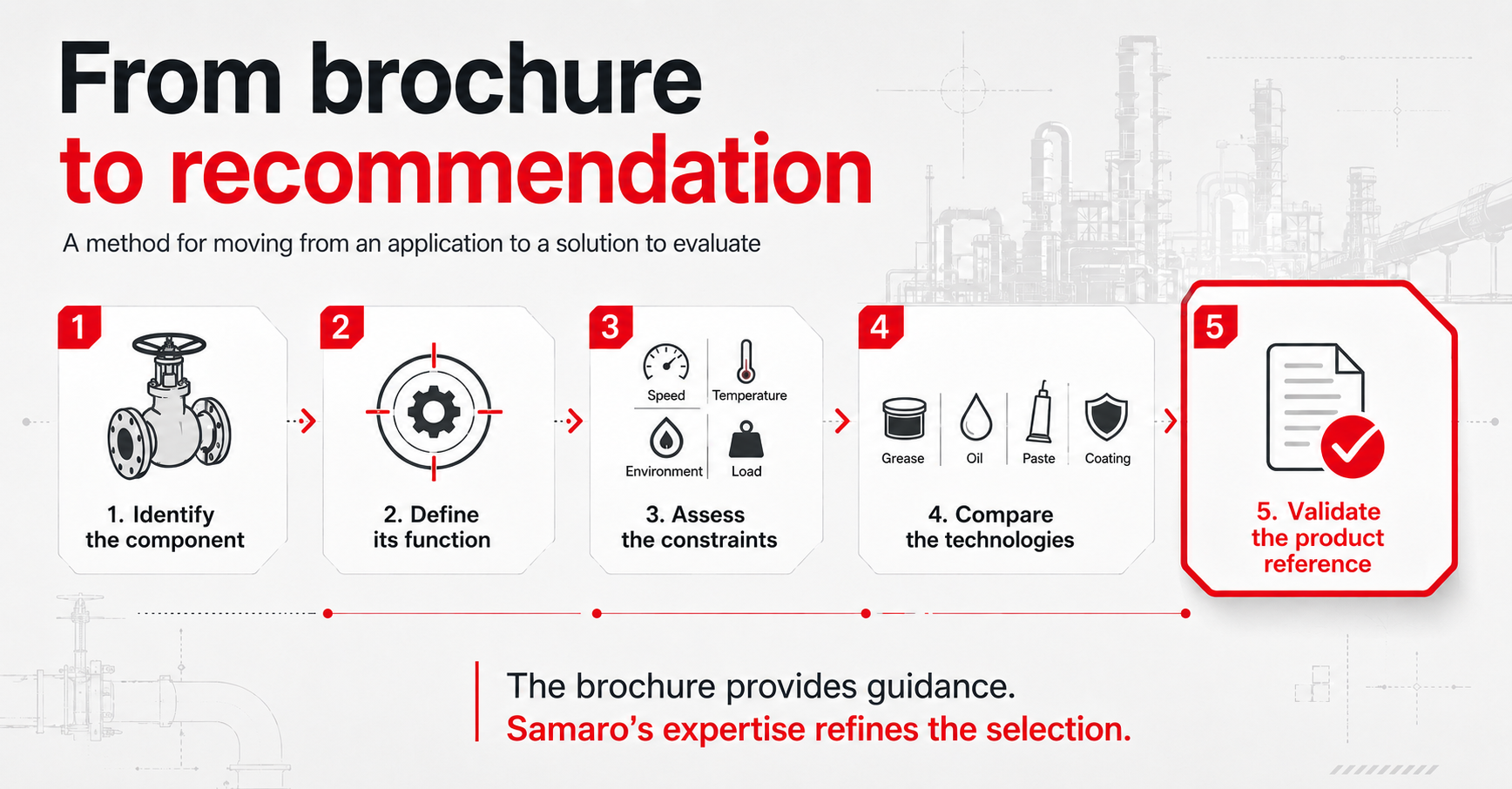
From brochure to recommendation: Samaro support
The brochure provides an overview of the applications and solution families available. It is a useful basis for preparing a search or a technical discussion.
Samaro’s role is then to turn customer information into usable selection criteria:
- Identify the component and its function.
- Check the materials in contact.
- Understand the movement.
- Specify temperatures, loads and speeds.
- Assess the presence of water, dust or chemicals.
- Take maintenance possibilities into account.
- Compare a limited number of references.
- Consult the TDS and SDS.
- Prepare tests before qualification.
This method helps avoid selecting a product only because it appears near an application in a document.
It connects MOLYKOTE® expertise with the reality of the equipment and the customer’s objectives.
Why download the new MOLYKOTE® Oil & Gas brochure?
Download the brochure to: